
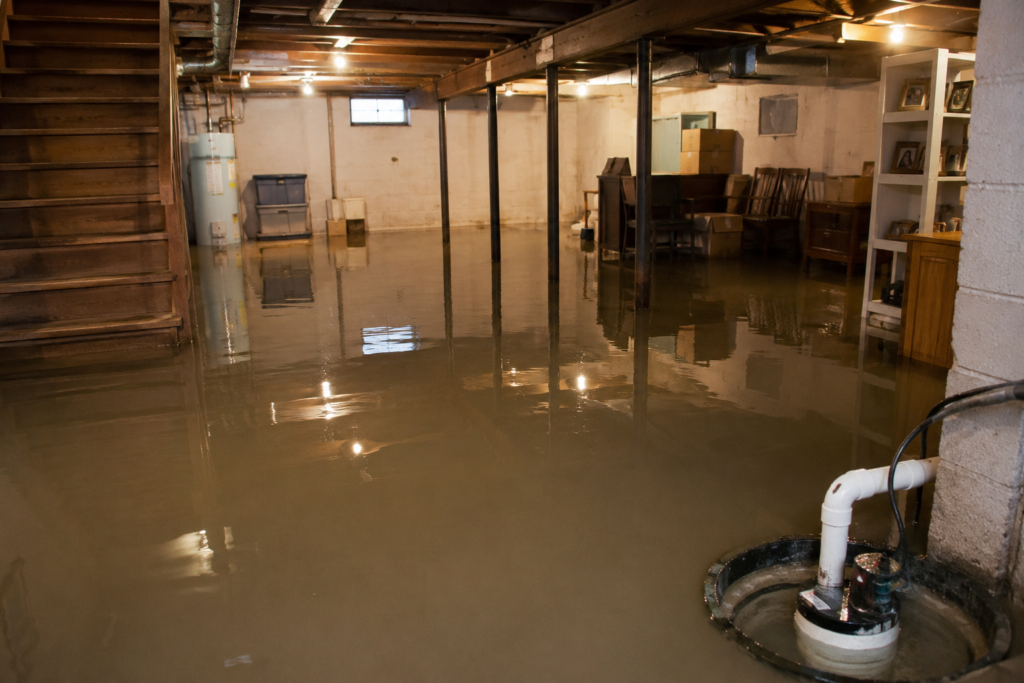
Of all the home emergencies a homeowner can face, a sump pump failure combined with a basement flood is one of the most stressful and potentially most expensive. The sump pump sits quietly in its pit, working automatically in the background to keep groundwater and storm runoff away from your foundation. When it fails – from a power outage, a worn-out motor, a stuck float switch, or simply old age – the consequences arrive fast and without warning.
Within hours of a pump failure during a rain event, a basement that was completely dry can have several inches of standing water covering the floor, soaking everything stored at ground level and beginning to saturate the structural materials that make up your home’s foundation. And unlike a burst pipe that at least announces itself dramatically, a sump pump failure often happens while you’re asleep or away – meaning significant damage has already occurred before you even know there’s a problem.
This guide covers exactly what to do when your sump pump fails and your basement floods, what damage is happening inside your structure that you cannot see, and why professional emergency response and restoration is the only approach that fully addresses what a basement flood actually does to your home.
Why Sump Pumps Fail – And Why Timing Matters So Much
Understanding why sump pumps fail helps you catch the warning signs before the next major rain event catches you unprepared:
- Power outages: Storms that cause the most flooding are the same storms most likely to knock out power – disabling a standard sump pump at exactly the moment it’s needed most. This is why battery backup systems are so critical in homes that rely on sump pumps.
- Motor burnout: Sump pump motors have a finite lifespan – typically 7 to 10 years. A motor that has been running continuously during a prolonged rain event can overheat and fail mid-operation.
- Float switch failure: The float switch tells the pump when to activate based on water level in the pit. A switch that gets stuck in the off position means the pump never activates, even as water rises.
- Clogged or frozen discharge pipe: Even a working pump can’t do its job if the pipe carrying water away from your home is blocked with debris or frozen solid during winter months.
- Undersized pump for water volume: A pump that isn’t powerful enough for the volume of water entering during heavy rain will run continuously, overheat, and fail – or simply not keep up with the inflow rate.
- Age and lack of maintenance: Most homeowners never test their sump pump until the day it fails. Annual testing and proactive replacement at the 7 to 10 year mark prevents failure at the worst possible moment.
The First 60 Minutes After Discovering a Flooded Basement
Every minute of standing water in your basement increases the depth of structural saturation. Follow these steps immediately and in this order:
- Step 1 – Electricity first, always: Before stepping into a flooded basement, go directly to your electrical panel and shut off every circuit serving that area. Standing water near outlets, appliances, or your electrical panel is a life-threatening electrocution hazard – this step is non-negotiable.
- Step 2 – Assess the source: Check whether the flooding is from a failed sump pump, a burst pipe, or groundwater intrusion through foundation cracks. Identifying the source determines whether there’s an ongoing input of water that needs to be stopped or contained.
- Step 3 – Document everything before cleanup: With electricity safely off, photograph and video the entire basement – water level, visible damage, location of the sump pump pit, and any affected belongings. This documentation is required for insurance claims and must be captured before cleanup alters the scene.
- Step 4 – Move valuables to higher ground immediately: Electronics, documents, sentimental items, and anything with financial value should come out of the water right away. Every additional minute of submersion increases damage to your belongings significantly.
- Step 5 – Begin surface water removal if safe: Use a wet-dry vacuum or portable submersible pump to start removing standing water while professional help is on the way. Surface water removal reduces the total volume that penetrates into structural materials.
- Step 6 – Call for professional emergency water extraction: Contact emergency water extraction immediately – industrial extraction equipment removes water from concrete, subfloor materials, and structural cavities far more effectively than consumer tools, and getting this process started quickly is the single most important factor in limiting total damage.
What the Floodwater Is Doing Inside Your Structure Right Now
The standing water visible on your basement floor is only the most obvious part of what’s happening. From the moment flooding begins, water is penetrating:
- Concrete floors and walls: Basement concrete is porous and absorbs water rapidly during a flooding event. Even after visible water is completely removed, saturated concrete continues releasing moisture as humidity into the basement air for days – creating the sustained dampness that mold requires to grow.
- Subfloor materials: If your basement has any finished flooring over a subfloor, those materials are absorbing water through their full thickness, swelling, delaminating, and beginning to lose structural integrity.
- Wall framing and insulation: In finished basements, water travels behind drywall into wall cavities, saturating insulation and holding it against wooden framing – creating a hidden wet environment with no natural air circulation that is ideal for mold colonization.
- HVAC equipment and ductwork: Water heaters, furnaces, and ductwork located in the basement are all at risk during flooding. Water that enters ductwork can spread moisture and contaminants throughout the rest of your home every time the system runs.
- Stored belongings and contents: Cardboard, fabric, paper, and porous materials absorb water immediately and become sources of mold growth within 24 to 48 hours if not dried or removed.
A complete basement flood cleanup addresses all of these affected materials systematically – not just the visible water on the floor – using professional equipment designed to extract moisture from structural materials, not just from surfaces.
The 48-Hour Mold Window
This is the most critical fact every homeowner needs to understand about basement flooding. According to the U.S. Environmental Protection Agency (EPA), mold begins growing on wet building materials within just 24 to 48 hours of water exposure.
In a basement environment – where air circulation is naturally limited, humidity runs high, and temperatures are relatively stable – this window closes even faster than in above-grade living spaces. Mold spores are present in virtually every home and require only moisture, a food source (any organic building material), and time to establish colonies.
A basement that floods on a Friday evening and isn’t professionally dried until Monday morning has almost certainly already crossed this threshold. Surface cleaning and household fans do not change this outcome – they address airflow at the surface only, without touching the moisture inside concrete, within wall cavities, or under any finished flooring.
If you’re concerned your home may already have mold following a flooding event, mold prevention treatment applied by professionals immediately after drying is the most effective way to stop mold establishment before it becomes a full remediation project.
Professional Structural Drying – Why It’s Different From Just Running Fans
Once standing water is extracted, the real restoration work begins. Professional structural drying is a monitored, systematic process – not simply improving airflow and waiting:
- Moisture mapping: Using thermal imaging cameras and professional moisture meters, technicians identify every area of hidden dampness inside walls, under flooring, within concrete, and in structural cavities that is completely invisible to the naked eye and undetectable by touch.
- Strategic equipment placement: Commercial air movers and dehumidifiers are positioned based on the moisture map to create controlled airflow through affected structural spaces – drying materials from the inside out rather than from the surface inward.
- Daily monitoring: The structural drying process is not complete until daily moisture readings confirm that all structural materials have returned to established safe dryness levels – not just until the space feels or smells dry.
- Antimicrobial treatment: All affected surfaces receive treatment to eliminate bacteria and prevent mold growth before any finished surfaces are reinstalled or closed up.
For homeowners in the Boise, Idaho area dealing with basement flooding from sump pump failure or any other cause, the team at Boise ID Water Damage provides 24/7 emergency response with professional extraction, thermal imaging, structural drying, and complete restoration – working directly with your insurance company throughout the process.
Insurance Coverage for Sump Pump Failure and Basement Flooding
Whether your insurance covers basement flooding depends significantly on the cause and your specific policy:
- Sump pump failure riders: Standard homeowner’s policies typically do not cover sump pump failure flooding as a base coverage. However, many insurers offer a sump pump failure rider or water backup endorsement as an add-on – this is worth checking your policy for specifically.
- Sudden and accidental pipe failures: Flooding from a burst pipe or failed appliance is generally covered under standard homeowner’s policies.
- Groundwater and surface flooding: External flooding from storms or rising water tables requires separate flood insurance through FEMA’s National Flood Insurance Program and is not covered by standard homeowner’s policies.
- Documentation is essential: Regardless of cause, thorough photographic documentation of damage before cleanup begins, combined with a professional restoration company’s detailed damage report, significantly improves claim outcomes.
Preventing Future Sump Pump Failures
Once your basement is fully restored, these steps protect you from a repeat event:
- Install a battery backup sump pump: A battery backup unit activates automatically during power outages – keeping your basement protected during the storms most likely to cause flooding.
- Test your primary pump every spring: Pour water into the sump pit before wet season to confirm the pump activates, runs correctly, and the discharge pipe is clear and unobstructed.
- Replace aging pumps proactively: A pump over 7 to 10 years old should be replaced before it fails on its own terms – during the next major storm.
- Clear the discharge pipe seasonally: Check that the outlet pipe is free of debris, ice, and obstructions every season, particularly after winter.
- Install a water alarm: A simple sensor placed at the bottom of your basement floor provides early warning the moment moisture is detected – giving you time to respond before flooding becomes serious.
Final Thoughts
A sump pump failure and basement flood is a two-part emergency that requires two parts of a professional response: emergency extraction to stop the damage from spreading, and complete structural drying to address everything the water already saturated before you knew there was a problem.
The extraction is the part that’s visible. The structural drying is the part that actually determines whether your home fully recovers or develops chronic mold and moisture problems in the months ahead. Don’t skip the second part because the floor looks dry – what’s inside your walls and under your concrete is what matters most.
Act fast, document everything, and get professional help on site as quickly as possible. Every hour of delay increases the depth of saturation and shortens the window before mold becomes part of the story.
Leave a Reply