
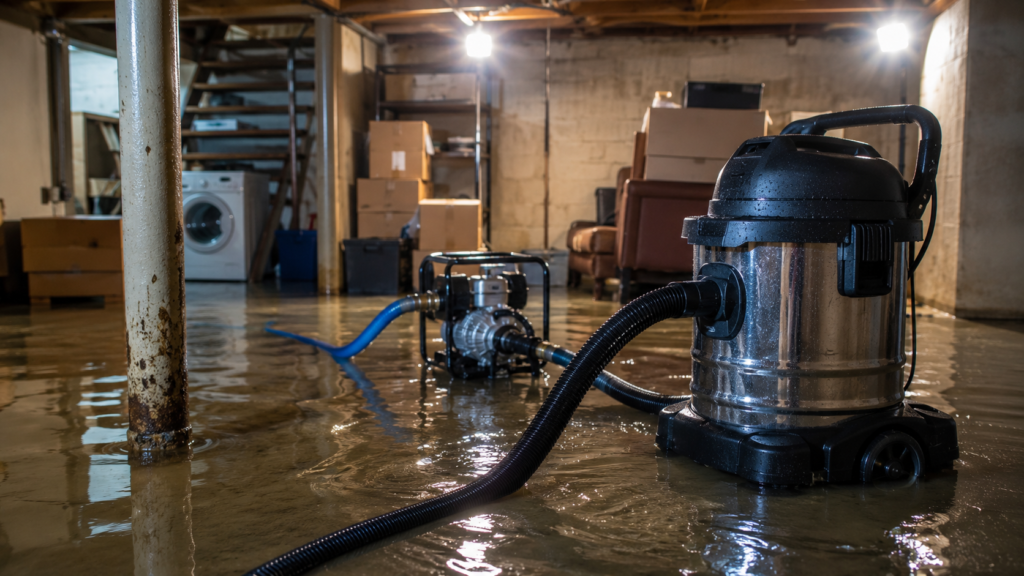
A flooded basement is one of those problems that never happens at a convenient time. It’s usually the middle of the night, during a storm, or right after you’ve left for vacation. Whatever the cause – a burst pipe, a failed sump pump, heavy rain, or sewer backup – the first few hours after you discover the water matter more than almost anything else that follows. Acting quickly and in the right order can mean the difference between a same-day cleanup and weeks of structural repairs.
This guide walks you through exactly what to do, in order, from the moment you spot water on your basement floor to the point where your home is fully dry and safe again.
Step 1: Prioritize Safety Before Anything Else
Before you step into a flooded basement, stop and think about electrical safety. Water and electricity are a dangerous combination, and even a few inches of standing water can carry a live current if outlets, cords, or appliances are submerged.
- Turn off the electricity to the affected area at the breaker panel – but only if you can reach it without walking through water.
- If the breaker panel itself is in the flooded area, do not enter. Call an electrician or your utility provider first.
- Avoid using any electrical appliances, including standard shop vacuums, until you’ve confirmed the area is safe.
- Watch for contamination. If the water is coming from a sewer backup or has been sitting for more than 24 to 48 hours, treat it as contaminated and avoid direct contact with skin.
Once you’ve confirmed the space is safe to enter, you can move on to stopping the source of the water.
Step 2: Identify and Stop the Water Source
Flooding generally comes from one of three places: a plumbing failure inside the home, groundwater or storm water entering through the foundation, or a sewer backup. Figuring out which one you’re dealing with changes what happens next.
- Burst or leaking pipe: Shut off your home’s main water valve immediately.
- Sump pump failure: Check whether the pump is running. If it’s not, and water keeps rising, you’ll need a battery backup or manual pump to buy time until it’s repaired.
- Storm or groundwater intrusion: This usually points to a waterproofing issue that will resurface with the next heavy rain unless it’s addressed properly.
- Sewer backup: Stop using water anywhere in the house – sinks, toilets, washing machines – until the blockage is cleared, and treat everything the water touched as contaminated.
If you’re not sure which category applies, that’s a good sign it’s time to bring in a professional for a proper water damage assessment rather than guessing.
Step 3: Document Everything for Insurance
Before you start removing water or moving belongings, take photos and video of the damage. Insurance claims move faster and pay out more accurately when you have clear evidence of:
- The water level and how far it spread
- Damaged furniture, flooring, and belongings
- Any visible structural damage (drywall, insulation, framing)
Keep receipts for anything you purchase during cleanup, including equipment rentals, and save any correspondence with your insurance adjuster. If the damage is significant, a professional restoration company can also provide documentation that supports your claim.
Step 4: Remove Standing Water Quickly
The longer water sits, the more damage it causes – not just to flooring and drywall, but to the structural wood framing underneath. Standing water also creates ideal conditions for mold within as little as 24 to 48 hours.
For small amounts of water, a wet/dry shop vacuum can work. For anything beyond an inch or two, or for a basement that’s fully flooded, you’ll need industrial-grade pumps and extraction equipment to get the water out fast enough to limit damage. This is where emergency water extraction services make the biggest difference – professional equipment can remove water in hours rather than days.
Step 5: Remove Damaged Materials
Once the standing water is gone, walk through what needs to come out:
- Wet carpet, carpet padding, and rugs (padding almost never survives a flood and should be discarded)
- Drywall and insulation that was submerged, typically up to a foot above the waterline
- Furniture with water damage, particularly anything with particleboard or upholstery
- Cardboard boxes and paper goods, which wick water and mold quickly
If you have salvageable belongings – furniture, documents, electronics – proper cleaning and drying can save more than you’d expect. A content salvage and recovery service can assess what’s worth restoring versus replacing.
Step 6: Dry the Space Completely
This is the step most homeowners underestimate. A basement can look dry on the surface within a day or two, while the wood framing, subfloor, and wall cavities are still holding moisture for weeks. That trapped moisture is exactly what leads to mold, warping, and structural rot later on.
Proper drying typically involves:
- Industrial air movers to circulate air across wet surfaces
- Commercial dehumidifiers to pull moisture out of the air and materials
- Moisture meters to confirm materials are actually dry, not just dry to the touch
This is a case where structural drying and dehumidification done properly the first time save you from a second, more expensive problem down the road.
Step 7: Clean and Disinfect
Any surface that came into contact with floodwater should be cleaned and disinfected, even if the water looked relatively clean. Floodwater can carry bacteria, sewage, and chemicals from the ground, especially if it entered through a foundation crack or floor drain.
- Wipe down hard surfaces with an appropriate disinfectant
- Discard porous materials that can’t be fully disinfected (carpet padding, some drywall, insulation)
- Address odor at the source rather than masking it, since lingering smells usually mean lingering moisture
Step 8: Watch for Mold – Even After Everything Looks Dry
Mold doesn’t need much time to take hold, and it doesn’t always show up where you’d expect. Check behind baseboards, under flooring, and inside wall cavities in the weeks following a flood, not just in the first few days.
If you catch conditions early, mold prevention treatment can stop growth before it starts, which is a far simpler and cheaper process than remediation after the fact.
When to Call a Professional
Some flooding situations are manageable with a shop vacuum, a few fans, and a weekend of work. Others aren’t. It’s time to call in professional help when:
- Water covered more than a few inches of floor space
- The flooding involved sewage or was standing for more than 24 hours
- You’re not confident the space is fully dry, especially inside walls
- The affected area includes finished flooring, drywall, or a furnace/electrical panel
- You want documentation for an insurance claim
A professional team can get equipment on-site quickly, dry the space properly the first time, and catch problems – like hidden moisture or early mold growth – that are easy to miss on your own.
Frequently Asked Questions
How long does basement flood cleanup take?
Removing standing water usually takes a few hours with the right equipment, but full drying – including the wood framing and any wall cavities – typically takes three to five days. Rushing this step is the most common reason mold shows up weeks later.
Can I clean up a flooded basement myself?
For minor water from a small leak, yes. For anything involving more than a few inches of water, sewage contamination, or flooding that sat for over a day, professional equipment and drying verification are worth the cost, both for your health and for the long-term condition of your home.
Will my insurance cover basement flood cleanup?
It depends on the cause. Sudden pipe bursts are often covered, while gradual seepage or overland flooding may require separate sewer backup or overland flood coverage. Check your policy specifics, and keep thorough documentation regardless of the cause.
How do I know if my basement is fully dry?
Surface dryness isn’t enough. Moisture meters checking the subfloor, drywall, and framing are the only reliable way to confirm a space is dry enough to rebuild or refinish safely.
The Bottom Line
A flooded basement is stressful, but the outcome depends heavily on how quickly and thoroughly you respond in the first 24 to 48 hours. Shut off the water source, get the standing water out fast, dry the space completely (not just the surface), and keep a close eye on mold risk in the weeks that follow.
If your basement has flooded and you’d rather not navigate it alone, get in touch with our team for emergency cleanup and restoration support — we’re available to help homeowners across Whitby, Brooklin, and the surrounding Durham Region.
Leave a Reply