
If you own a home in Whitby, you already know the drill: heavy spring rains, sudden snowmelt, and clay-heavy Durham Region soil are a rough combination for basements. Water doesn’t need a dramatic storm to find its way in – a slow, steady seep through a hairline foundation crack can do just as much damage over a season as one big flood event.
Basement waterproofing is one of those projects homeowners tend to think about only after they’ve already mopped up a mess. But understanding how it works, what your options are, and when to call in a professional can save you thousands of dollars and a lot of stress. Here’s what every Whitby homeowner should know.
Why Whitby Basements Are Especially Prone to Water Issues
Whitby sits on a mix of clay and glacial till soil that doesn’t drain particularly well. When that soil becomes saturated – which happens often during our spring thaw and heavy fall rains – it puts constant hydrostatic pressure against your foundation walls. Over time, that pressure finds every weak point: cracks, poorly sealed window wells, aging weeping tile, or gaps around utility penetrations.
Add to that the age of housing stock in neighbourhoods like downtown Whitby and the more rural properties on the outskirts of town, and you get two very different – but equally common – waterproofing challenges. Older homes often have aging or crumbling foundations and outdated drainage systems, while newer builds on rural Whitby lots may be dealing with poor grading or high water tables from nearby wetlands and ravines.
Signs Your Basement Needs Waterproofing
Water damage doesn’t always announce itself with a flood. Watch for these warning signs:
- Musty odours that persist even after cleaning – often a sign of trapped moisture or early mould growth
- Efflorescence – the white, chalky mineral deposits left behind on concrete after water evaporates
- Peeling paint or bubbling drywall near the floor line
- Visible cracks in the foundation wall or floor, especially ones that seem to widen over time
- A damp, cool feeling in the basement air even in summer
- Water stains or tide marks along the base of the walls
- A sump pump that runs constantly, which can indicate your drainage system is working overtime to keep up with groundwater
If any of these sound familiar, it’s worth getting a professional assessment before a minor issue becomes a major one. A water damage assessment can identify exactly where moisture is entering and how severe the problem has become.
Interior vs. Exterior Waterproofing: What’s the Difference?
Exterior waterproofing involves excavating around the foundation, applying a waterproof membrane directly to the foundation walls, and often installing or repairing exterior weeping tile to redirect groundwater away from the home. It’s the more invasive and expensive option, but it addresses the root cause – stopping water before it ever touches your foundation.
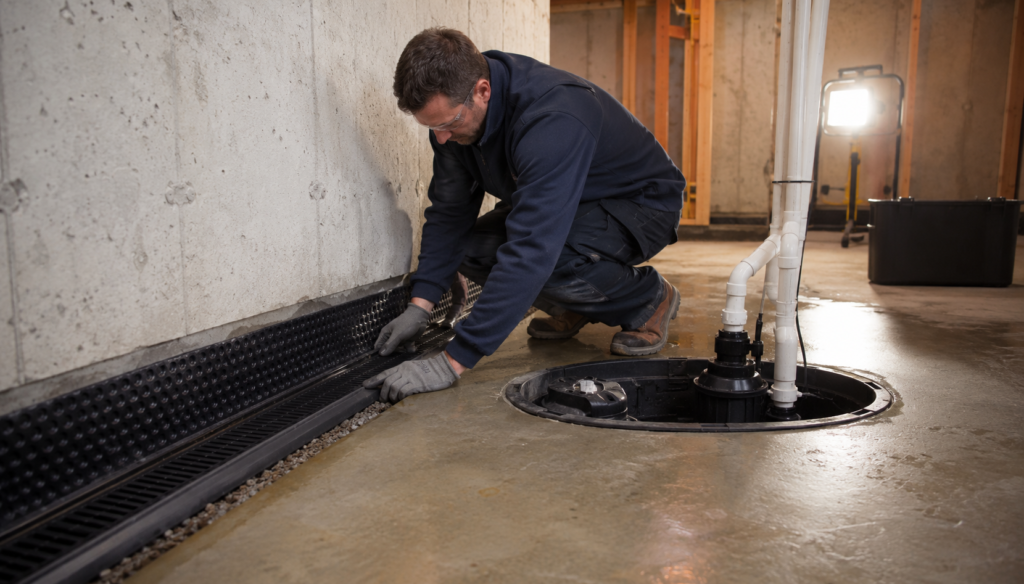
Interior waterproofing typically involves installing an interior drainage system (a channel along the base of the foundation walls) connected to a sump pump, which collects and removes water that has already made it through the concrete. This approach is less disruptive and generally more affordable, but it manages water after it enters rather than preventing entry altogether.
Many Whitby homes benefit from a combined approach: sealing visible cracks, improving surface grading, and pairing a reliable sump pump system with interior drainage. If your home already has a sump pump, keeping it well maintained is just as important as the waterproofing itself – a pump that fails during a storm can undo all that protection in minutes.
What a Professional Waterproofing Job Actually Involves
A proper waterproofing assessment isn’t just “find the crack and seal it.” A thorough process typically includes:
- Inspection of the foundation, grading, downspouts, and existing drainage
- Crack and joint repair using hydraulic cement or polyurethane injection, depending on the crack type
- Interior or exterior drainage installation, matched to your home’s specific water intrusion pattern
- Sump pump installation or upgrade, sized correctly for your home’s water volume
- Grading and downspout correction to direct surface water away from the foundation
- Sealing and membrane application for long-term protection
If your basement has already flooded, waterproofing should go hand in hand with proper cleanup. Standing water left untreated – even briefly – can lead to mould growth within 24 to 48 hours, which is why pairing waterproofing work with a basement flood cleanup is often the smarter long-term move rather than treating them as separate projects.
The Cost of Waiting
It’s tempting to put off waterproofing until “next season,” especially if the water intrusion seems minor. But small leaks compound. Persistent moisture:
- Weakens foundation concrete over time, leading to larger structural cracks
- Creates ideal conditions for mould, which can spread into wall cavities, insulation, and HVAC systems
- Degrades indoor air quality, which matters even if you never see visible mould – air quality testing is often the only way to catch this early
- Reduces resale value, since disclosure of past water damage is standard in Ontario real estate transactions
- Turns a waterproofing project into a full foundation waterproofing and structural repair project
The earlier you address moisture issues, the less invasive – and less expensive – the fix tends to be.
Waterproofing and Structural Drying Go Hand in Hand
If your basement has already experienced water intrusion, waterproofing alone won’t undo existing damage to framing, subfloor, or insulation. That’s where proper structural drying comes in – using industrial dehumidification and airflow equipment to bring moisture levels in building materials back to normal before they trap mould or cause rot. Skipping this step and waterproofing over still-damp materials is one of the most common (and costly) mistakes homeowners make.
Preventative Maintenance: The Best Waterproofing Is Ongoing
Waterproofing isn’t a one-time fix-it-and-forget-it project. Sump pumps need annual testing, especially before spring thaw. Downspouts and window wells need to be kept clear of debris. Foundation walls should be inspected yearly for new cracking. A preventative maintenance check once or twice a year can catch small issues – a clogged weeping tile, a failing check valve, a shifted grade – before they become an emergency call at 2 a.m. during a storm.
If mould has already taken hold from a past water event, don’t wait for waterproofing to also solve that problem – a dedicated mould prevention treatment addresses existing spores and contamination that waterproofing alone won’t remove.
Whitby Homeowners: Don’t Wait for the Next Storm
Whether you’re in an older home near downtown Whitby with aging weeping tile, or a newer build on the rural outskirts dealing with grading issues, basement water problems tend to get worse, not better, with time. The good news is that most waterproofing issues are entirely preventable with the right inspection and the right system in place.
If you’re noticing any of the warning signs above – or if you simply want peace of mind before the next heavy rain – contact us for a professional basement waterproofing assessment. Our team knows the local soil, drainage patterns, and building styles across Whitby and can recommend a solution that fits both your home and your budget.
Leave a Reply